Create Custom Wind Spinners with an Editable Canva Template
There’s a unique satisfaction in designing something that moves, catches the light, and brings a bit of kinetic energy to a space. Wind spinners are one of those projects that blend craft with visual art, and having a solid starting point can make all the difference. That’s where a well-structured Wind Spinner Canva Editable Template comes in. It’s not just a static image; it’s a flexible foundation for creating personalized spinners for sublimation, laser cutting, or even simple print-and-cut projects.
Understanding the Template’s Core Components
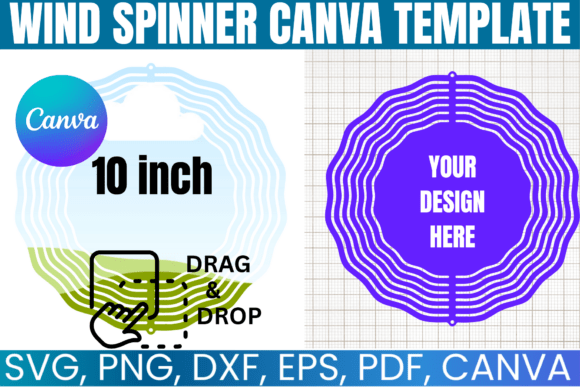
This particular Wind Spinner Template is designed as a Canva Editable Wind Spinner Design. What does that mean in practical terms? It means you’re working directly within Canva’s interface, which is familiar to many, and you can manipulate the elements using their drag-and-drop editor. The template typically includes the spinner’s symmetrical pattern, often laid out as a flat design that, when cut and assembled, creates the three-dimensional spinning effect.
Alongside the editable Canva link, the package usually provides key file formats. You’ll often find an SVG for Cricut, Silhouette, CorelDraw, Inkscape—this is crucial for vector-based cutting machines and design software where scalability without quality loss is essential. A PNG with a transparent background is perfect for layering in other design programs or for sublimation printing where you need to isolate the design. The DXF for Silhouette is a direct compatibility file for that specific ecosystem. Finally, a PDF with a solid white background can be handy for traditional printing or as a reference.
The inclusion of a Printable Spinner Mockup is a thoughtful addition. It allows you to visualize your final design on a realistic spinner shape before you commit to cutting or printing, saving time and material.
From Digital Template to Tangible Creation
The real value of this kind of design asset is in its application. For the home crafter, it’s a gateway to making personalized garden decor or unique gifts. Imagine customizing the colors and patterns to match a friend’s favorite palette or adding a monogram for a wedding favor. The DIY Wind Spinner Craft element is strong here; the template does the heavy lifting of symmetry and structure, letting you focus on the creative details.
For small business owners or creators, the commercial potential is clear. You could use the Sublimation SVG and related files to produce a line of ready-to-sell wind spinners at local markets or online. The ability to easily customize colors, shapes, and text means you can create themed collections—seasonal designs, sports team colors, or patterns that complement specific garden aesthetics. The template acts as a production-ready design asset, streamlining your workflow from concept to finished product.
It’s important to remember the licensing. While you can use the templates to create physical products for sale, the digital files themselves are for your use only. You cannot share, resell, or redistribute the original editable Canva link or the provided SVG, PNG, DXF, and PDF files. This is standard for digital design goods and protects the creator’s work.
Practical Considerations for a Smooth Project
Before diving in, a bit of planning helps. While the Canva editor is user-friendly, basic design software knowledge is recommended, especially if you need to resize the design for a different spinner diameter or tweak intricate details. Familiarize yourself with Canva’s layers panel and how to ungroup or edit elements.
Think about your final medium. If you’re using a Cricut or Silhouette machine, the SVG or DXF file will be your starting point. You’ll import it into your machine’s software (like Cricut Design Space or Silhouette Studio) to set up the cut lines. For sublimation, the PNG file is typically what you’ll print onto your transfer paper. The mockup designs included are invaluable for this stage—they let you test color combinations and see how the pattern will wrap around the finished form.
Consider the material you’ll be printing or cutting on. Metal for sublimation will give you a durable, shiny result perfect for outdoor display. Cardstock or lightweight plastic might be better for indoor spinners or temporary decorations. The template’s design should translate well across these materials, but always do a small test cut or print first.
Ultimately, a resource like this Wind Spinner Canva Editable Template is about empowering your creativity within a proven framework. It removes the technical hurdle of designing a perfectly balanced, visually appealing spinner from scratch, letting you jump straight into the enjoyable part: making something beautiful that moves with the wind. Whether it’s for your own patio, a gift, or a new product line, it provides a professional and efficient path from idea to finished, spinning art.