Behavior Visual Supports Workbook: A Toolkit for Calm
When a child is overwhelmed, words can become background noise. The Behavior Visual Supports Workbook steps into that gap, offering a tangible, visual language for emotions and expectations. This isn't just a collection of pretty pictures; it's a carefully designed system meant to translate abstract concepts like "self-regulation" and "following through" into clear, actionable cues. For the adult navigating a meltdown or a difficult transition, having a pre-made, printable toolkit removes the guesswork and frantic search for the right words in a heated moment.
The appeal of this toolkit lies in its personality: it is friendly, structured, and overwhelmingly positive. The visual style avoids clinical sterility. Instead, it uses engaging, child-friendly illustrations and a warm color palette that feels supportive rather than punitive. Think of it as a calm corner in a folder. The design understands that for a tool to be used consistently by a stressed parent or teacher, it must be easy to print, laminate, and cut—a practical, low-barrier entry point. Its "personality" is that of a patient, prepared helper, reducing the emotional labor on the adult who implements it.
Where This Toolkit Truly Shines: Real-World Applications
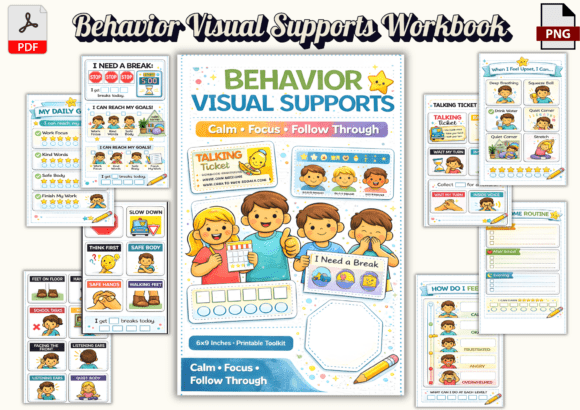
The strength of the Behavior Visual Supports Workbook is its versatility across environments. In a preschool or primary classroom, the classroom behavior reminder cards and transition warning cards become part of the daily visual landscape. They provide consistent, non-verbal cues that support entire groups, not just individual children. For special education teachers developing behavior intervention plans, the editable-style daily routine checklist and "I Need a Break" system offer a structured starting point that can be personalized, saving hours of creation time.
For homeschooling families, the toolkit transforms routine. The home behavior routine chart and daily goals tracker integrate seamlessly into the learning day, providing clarity and a sense of accomplishment. The calm down choice board empowers children with agency over their emotional regulation, presenting options like deep breathing or squeezing a stress ball visually. This is where the toolkit moves from being a reactive document to a proactive brand identity for your home or classroom's emotional management system—a consistent, recognizable framework everyone learns to trust.
Design Principles Behind the Visual Supports
As a creative professional, you'll recognize the thoughtful modern typography and layout principles at work. The text is clear, with high contrast, ensuring readability for both children and adults. The use of icons and simple illustrations follows universal design principles, making the supports accessible even to pre-readers or children with sensory processing needs. This is editorial design with a functional purpose; every element serves to reduce cognitive load during moments of high stress.
The inclusion of a positive reinforcement reward board and a Talking Ticket reward system demonstrates an understanding of behavioral psychology. These aren't generic sticker charts; they are designed to foster communication and intrinsic motivation. The visual hierarchy within each page guides the eye naturally, a key aspect of effective web design and print design that is perfectly adapted here for behavioral tools. The toolkit functions as a set of design assets for emotional literacy, where consistency in imagery and layout builds recognition and trust for the child.
Practical Integration for Parents and Educators
Implementing the Behavior Visual Supports Workbook is about integration, not just printing. Start with one or two tools that address your most frequent challenge. For a child struggling with ADHD management, begin with the transition warning cards and the daily goals tracker. For autism support, the emotional regulation scale and the calm down choice board can be foundational. Laminate the pieces for durability and store them in a designated "calm down" binder or on a ring for portability.
Consider how these visuals pair with your environment. The cards can be attached with velcro to a visual schedule board, placed in a calm corner, or kept in a child's backpack. The blank customizable templates are a critical feature, allowing you to add specific photos (like a picture of the child's own classroom or a preferred calming toy) or personalized goals. This level of customization elevates the toolkit from a generic PDF to a personalized component of your child's or student's brand identity for growth and self-management.
The Lasting Value of Visual Systems
The true value of this printable pack extends beyond immediate crisis management. It builds a shared vocabulary. When a child points to the "frustrated" face on the emotional scale, they are learning to identify and communicate a complex internal state. This is the foundation of emotional intelligence. For the adult, it provides a consistent, neutral script. Instead of issuing a command in a tense moment, you can point to a card that says, "First work, then break." This shifts the dynamic from confrontation to collaboration.
Ultimately, the Behavior Visual Supports Workbook is more than a collection of printable pages. It is a communication bridge, a tool for building executive function, and a scaffold for independence. Its clean design and practical focus make it a standout resource in the crowded field of educational materials. By reducing the ambiguity that often fuels anxiety and behavioral challenges, it creates space for calm, focus, and the positive follow-through that helps children thrive.