Spring Frames for Canva: Fresh Design Assets
The Power of Visual Containment in Modern Design
When you are building a brand or creating content, the way you frame your imagery is just as important as the image itself. In the world of modern typography and graphic design, structure creates focus. While we often obsess over finding the perfect sans serif font or script font for our headers, we sometimes forget the container that holds our visual story. This is where the utility of a tool like Spring Frames for Canva becomes undeniable. It shifts the focus from text-based hierarchy to shape-based storytelling, offering a distinct visual personality that softens the digital experience.
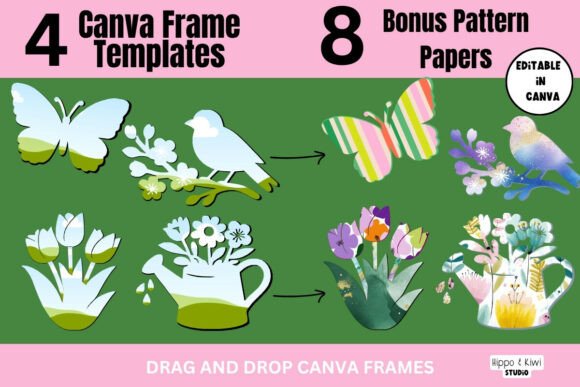
Unlike a standard display font which demands attention through letterforms, these frames work as architectural elements. They provide a "canvas within a canvas," allowing you to isolate specific visual information. The aesthetic is inherently organic and seasonal, moving away from the rigid rectangles of standard web design. By using shapes like a watering can or a tulip, you instantly inject a personality that is approachable and thematic without needing to overhaul your entire brand identity. It is a subtle shift that speaks volumes about attention to detail and seasonal relevance.
Practical Applications for Marketers and Creators
For the entrepreneur or content creator, the value of Spring Frames for Canva lies in its versatility across different media types. These are not just static templates; they are dynamic design assets that adapt to photos, videos, and patterns. Consider the impact on social media graphics. In a crowded feed, a standard square photo often gets scrolled past. However, a video clip cropped into the shape of a bird branch or a butterfly creates an immediate visual pause. It breaks the grid pattern of a platform like Instagram or Pinterest, which is a proven strategy for increasing engagement.
Furthermore, these frames solve the "blank page" problem often faced in editorial design and packaging design. If you are a blogger creating a media kit or a small business owner designing a product label, the floral elements provide an instant thematic anchor. You don't need to commission custom illustration work to achieve a seasonal look. The included bonus pattern papers are particularly useful here. They allow you to fill the negative space around your subject with complementary textures, ensuring that your typography—whether it is a bold premium font or a delicate handwritten font—remains legible against a cohesive background.
Integrating Frames with Typography and Hierarchy
A common pitfall in design is treating graphics and text as separate entities. To achieve professional visual hierarchy, these elements must converse. When using Spring Frames for Canva, you must consider how your text interacts with the organic shapes. Because the frames are non-rectangular, standard left-aligned text blocks might feel awkward next to them. Instead, consider centering your text or using a modern typography approach with generous white space.
The frames are particularly effective when paired with the right typeface. For instance, the "Tulips" frame has a rounded, soft geometry that pairs beautifully with a geometric sans serif font. This contrast creates a balance between the organic illustration and the structured text. Conversely, the "Butterfly" frame, which implies movement, pairs well with a flowing script font for headers, while a clean serif font handles the body copy. This interplay ensures that your message is not just seen, but felt. It elevates a simple card design or classroom printable into something that looks store-bought.
Evaluating Project Fit and Commercial Utility
As a designer or brand strategist, knowing when to use a specific asset is crucial. Spring Frames for Canva are ideal for projects requiring a seasonal refresh or a touch of whimsy. They are perfect for DIY greeting cards, invitations, and scrapbooking, but their utility extends into commercial spaces. A florist, a garden center, or a lifestyle brand can use these frames in their web design elements or email headers to signal the arrival of the season without a complete rebrand.
However, context matters. These frames are not suited for highly corporate or industrial contexts where rigid geometry is preferred. They work best in environments where approachability is key. When evaluating the fit for your project, consider the "noise" level. A complex photo placed inside a detailed frame can become visually overwhelming. The best practice is to use the "clipping mask" functionality in Canva to drop in high-contrast images or solid colors. This ensures the frame shape remains distinct, maintaining the readability of any overlaid text and preserving the consistency of your design language.
Streamlining Workflow and Creative Consistency
One of the biggest challenges for small business owners and solo creators is maintaining a consistent output across multiple platforms. Using a set like Spring Frames for Canva creates a unified visual thread. You can use the watering can frame for a "Tip Tuesday" post on social media, and the bird branch frame for a blog post sidebar, and the tulip frame for a printable worksheet. This repetition of visual motifs builds recognition.
It is also a matter of efficiency. In the fast-paced world of digital marketing, speed is a competitive advantage. Instead of drawing vector paths or sourcing individual clipart, you are working with pre-made, drag-and-drop solutions. This allows you to focus your energy on the core message—whether that is a marketing campaign, a lesson plan, or a personal journal entry. By utilizing these creative font alternatives (in the sense of shape-based creativity), you streamline the production process while significantly raising the production value of the final output. It is a practical investment in both aesthetics and workflow.